How Much Does It Cost to Install a Ceiling Fan?
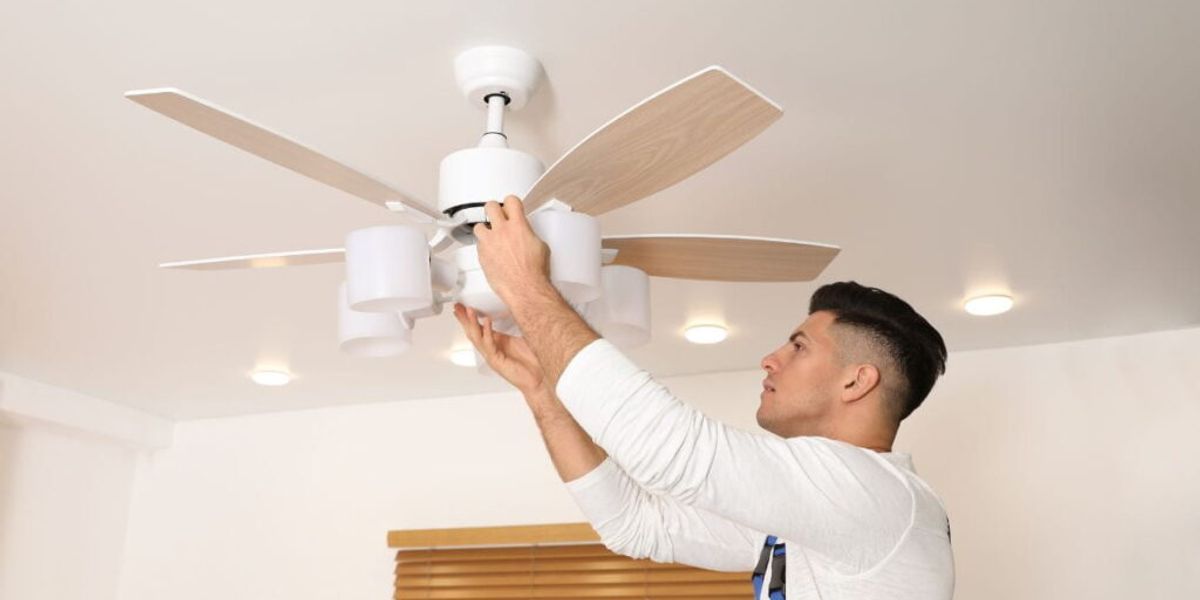
Installing a ceiling fan costs $146 to $360, averaging about $253, according to Angi's 2026 data from 9,729 verified projects. That is the professionally installed price — the fan and the labour — for a standard replacement at a ceiling that already has wiring. If the room has no ceiling wiring at all, the job becomes an electrical project and the total rises to $400 to $1,000.
A ceiling fan is a small job with a wide range, set by one thing: what is already in the ceiling. An existing fan box, a light fixture, or bare drywall are three different jobs at three different prices.
Ceiling Fan Installation Cost at a Glance
The table below shows typical prices in the United States, checked Nov 10, 2026 (sources: Angi, HomeGuide, and Home Depot).
| Item | Typical cost |
|---|---|
| National average | About $253 |
| Most projects | $146–$360 |
| Replacement, fan supplied and installed | $150–$500 |
| Labour only, existing wiring | $100–$300 |
| Install with new wiring | $400–$1,000 |
| Budget job | $100–$155 |
| Premium job (designer fan, smart controls) | $450–$600 |
| Electrician hourly rate | $50–$130 per hour |
| Handyman hourly rate | $50–$80 per hour |
A basic 42- to 52-inch fan costs $50 to $150; a designer fan from Hunter, Minka Aire, or Big Ass Fans can cost $300 to $600 before labour.
The Three Jobs: Swap, Conversion, or New Wiring
Every ceiling fan install is one of three jobs, and the quote should say which one it is.
| Job | What it involves | Typical total |
|---|---|---|
| Existing-box swap | Remove old fan, fit new fan on the same box | $150–$500 |
| Light-fixture swap | Replace a light with a fan, upgrade the box | $200–$600 |
| New wiring | Run cable, fit a new box and switch, new circuit if needed | $400–$1,000+ |
An existing-box swap is the cheapest: the wiring, the switch, and the support are already there, so the electrician's labour runs $100 to $300 and the job takes one to two hours. Housecall Pro's 2026 customer data puts a customer-supplied fan on an existing box at $199 to $550, or $229 to $760 with a light kit.
A light-fixture swap costs more because the box must be replaced — a light fixture hangs from a box that is not rated to hold a spinning fan, and that is a real safety difference, not an upsell. The box upgrade costs $25 to $75 in parts and $50 to $100 in labour on top of the swap.
New wiring is the expensive version. If the room has no ceiling fixture at all, the electrician must run cable from a switch or a circuit, fit a new box, and sometimes add a circuit — $150 to $600 for a dedicated 20-amp circuit alone. HomeGuide puts the complete new-wiring job at $400 to $1,000, and difficult routes through finished ceilings cost more.
The Fan-Rated Box Trap
The fan-rated box is the detail most homeowners never hear about until the quote arrives — and it is the detail that matters most for safety.
A ceiling fan vibrates and weighs 15 to 50 pounds. A standard light-fixture box is rated to hold a light, not a moving load, and it will work loose over time. A fan-rated box is braced to the ceiling joist and rated for the weight and motion. It costs $25 to $75 in parts and $50 to $100 in labour to fit — a small line on the quote that prevents a fan falling on someone's head.
A good electrician checks the box before quoting. A quote that does not mention it either assumes one is already there — ask — or plans to hang a fan on a light box, which is not a quote to accept.
Who Installs It, and What They Charge
A ceiling fan is electrical work, and the trade you hire sets the rate.
Electricians charge $50 to $130 an hour, per our earlier guide to electrician rates, plus a $100 to $200 service call fee that usually covers the first hour. That is the right hire for a new-wiring job, a new circuit, or any work inside the panel. Home Depot's installation service describes a general labour range of $100 to $300 for a straightforward fan install.
Handypeople charge $50 to $80 an hour and suit a simple swap on an existing fan-rated box. They are cheaper for the easy job, but they are not the right hire for new wiring or a new circuit — that is licensed electrician work, and in many areas it legally must be.
| Who | Hourly rate | Best for |
|---|---|---|
| Electrician | $50–$130 per hour | New wiring, new circuit, panel work |
| Handyman | $50–$80 per hour | Simple swap on an existing box |
| Home Depot install service | $100–$300 labour | Straightforward replacement |
Most fans take one to two hours, so an electrician at $85 to $125 an hour quotes $85 to $250 per fan for a straightforward install. The service call fee is charged once per visit, which is why multiple fans in one visit cost far less per fan than separate visits.
Ceiling Height and Other Add-Ons
High ceilings add a downrod ($20 to $60) and the time to work from a tall ladder. Fans should hang 7 to 9 feet above the floor — higher, and they move air above you.
Smart and remote controls add $30 to $100, or $50 to $150 if the wall control needs new wiring. A light kit adds $20 to $100. A permit runs $20 to $100, plus $25 to $75 for an inspection where required.
Multiple Fans, One Visit: The Cheapest Saving
The call-out fee is the biggest saving lever on this job, because it is charged once per visit. Three fans installed in one visit cost far less per fan than three separate jobs — the electrician is already there, the ladder is already up, and the second and third fans take less time than the first.
| Visit | Fans | Typical total |
|---|---|---|
| One visit, one fan | 1 | $150–$500 |
| One visit, two fans | 2 | $300–$800 |
| One visit, three fans | 3 | $450–$1,000 |
| Three separate visits | 3 | $600–$1,500 |
If you are planning fans in two or three rooms, book them together and ask for the multi-fan price in writing.
A Worked Example: Two Fans, Existing Boxes
Take a homeowner installing two mid-range fans with light kits in two bedrooms, both with existing fan-rated boxes, the fans supplied by the homeowner.
| Line item | Cost |
|---|---|
| Two fans with light kits, $150 each | $300 |
| Service call fee (covers first hour) | $150 |
| Second hour of labour at $85 | $85 |
| Total | $535 |
That is about $268 per fan — inside the $146 to $360 typical range, near the middle. Booked as two separate visits, the same work would cost about $670, because each visit carries its own $100 to $200 call-out fee. The $135 saving is the call-out fee, paid once instead of twice.
Mistakes to Avoid
- Hanging a fan on a light box. A light-fixture box is not rated for a spinning fan. The $25 to $75 fan-rated box is not optional.
- Buying the fan before checking the ceiling. A high or vaulted ceiling needs a downrod, and a room with no wiring needs an electrical job — check first, buy second.
- Paying a call-out fee per fan. Bundle multiple fans into one visit and pay the fee once.
- Hiring a handyman for new wiring. A swap is fine; new cable and circuits are licensed electrician work.
- Forgetting the permit. Some areas require one for new wiring, at $20 to $100, plus an inspection. Ask before the work starts, not after.
Frequently Asked Questions
How much does it cost to install a ceiling fan?
About $253 on average, checked Nov 10, 2026, with most projects between $146 and $360. A replacement on existing wiring costs $150 to $500 all-in; a new-wiring install costs $400 to $1,000.
Do I need an electrician to install a ceiling fan?
For a simple swap on an existing fan-rated box, a handyman at $50 to $80 an hour is fine. For new wiring, a new circuit, or any panel work, hire a licensed electrician at $50 to $130 an hour.
What is a fan-rated box, and do I need one?
A ceiling box braced to the joist and rated for a fan's weight and vibration. A light-fixture box is not rated for it and will work loose. The upgrade costs $25 to $75 in parts plus $50 to $100 in labour.
How long does ceiling fan installation take?
One to two hours per fan for a straightforward swap. New wiring adds half a day or more, depending on the cable route through the ceiling.
Is it cheaper to install multiple ceiling fans at once?
Yes. The $100 to $200 call-out fee is charged once per visit, so two or three fans in one visit cost far less per fan than separate visits.