How Much Does a Storage Unit Cost Per Month?
A storage unit can cost $50 a month or $300 a month. The difference comes down to three choices: the size you rent, the city you rent in, and the fees nobody mentions in the headline price. Get those three right and a unit is cheap insurance for a move, a renovation, or a house that has run out of closets. Get them wrong and you pay every month for empty air.
Most people rent in a hurry — a lease ends Friday, the movers come Saturday — and take whatever size the facility suggests. This guide gives you the real prices by size, the city differences, the hidden fees, and a worked example for a full year.
Storage Unit Prices at a Glance
The table below shows typical monthly rents for standard (non-climate-controlled) units, checked Nov 5, 2026 (sources: Extra Space Storage pricing pages, Neighbor's 50-state guide, and SpareFoot listings). Prices are national averages — your city can be 30% cheaper or 50% more expensive.
| Unit size | What it fits | Typical monthly rent |
|---|---|---|
| 5×5 (25 sq ft) | Boxes, a small closet's worth | $47–$53 |
| 5×10 (50 sq ft) | A studio's furniture | $65–$85 |
| 10×10 (100 sq ft) | One-bedroom apartment | $110–$135 |
| 10×15 (150 sq ft) | Two-bedroom apartment | $140–$175 |
| 10×20 (200 sq ft) | Three-bedroom house | $180–$220 |
| 10×30 (300 sq ft) | A full house plus a car | $258–$282 |
The jump between sizes is not a straight line: a 10×30 costs only about twice a 10×10 while holding three times as much. If you are between two sizes, the bigger one is often the better deal per square foot — but only if you actually fill it.
Many facilities advertise the first month for $1 or 50% off, which is real money on a 10×20 — but it is a one-time saving. Always ask what month two costs before you sign.
What Size Storage Unit Do You Need?
The honest way to choose is to list what goes in, not to guess. A 5×5 holds about 20 to 30 medium boxes, or a hall closet's worth — winter clothes, holiday decorations, a few books. It will not hold a sofa or a mattress. A 5×10 adds room for a twin bed, a bike, and a dresser, roughly a studio's worth if you stack well.
A 10×10 — the most rented size — holds a full one-bedroom apartment: a queen bed, a sofa, a dining table, and 20 or so boxes. A 10×15 takes a two-bedroom apartment, a 10×20 a three-bedroom house, and a 10×30 a full house plus a vehicle.
Measure your biggest item first. A queen mattress is 60 by 80 inches; it fits through a 10-foot-wide unit door but not a 5-foot one. And leave a walkway — a unit packed wall to wall means you cannot reach the box at the back without emptying the front.
Climate-Controlled vs Standard Units
A climate-controlled unit keeps the temperature roughly between 55 and 80 degrees and the humidity in check; a standard unit can hit 100 degrees in summer and freeze in winter. That difference costs about 25% to 50% more — a 10×10 at $120 standard typically rents for $150 to $180 climate-controlled.
You need climate control for anything that warps, cracks, or grows mold: wooden furniture, leather sofas, electronics, photographs, books, and mattresses. You do not need it for metal tools, plastic bins, or patio furniture — if you would not store it in an unheated garage for a year, do not store it in a standard unit.
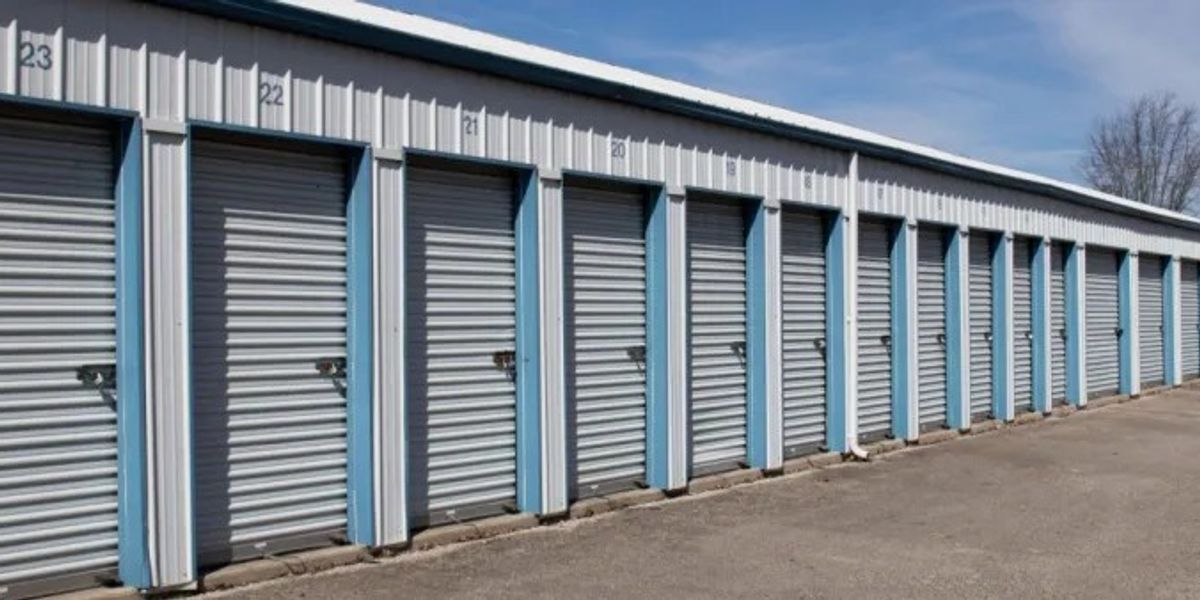
Drive-up access is the other upgrade: a ground-floor unit you can back a truck up to costs more than an upstairs unit reached by elevator — worth it if you move heavy furniture in and out more than once.
Storage Unit Prices by City
The same 10×10 unit that costs about $120 a month nationally can cost very different amounts by city (checked Nov 5, 2026; sources: Extra Space Storage and Neighbor city pricing).
| City | Typical 10×10 monthly rent |
|---|---|
| New York, NY | $190–$240 |
| Los Angeles, CA | $165–$210 |
| Chicago, IL | $130–$170 |
| Houston, TX | $95–$125 |
| Phoenix, AZ | $90–$120 |
| Atlanta, GA | $100–$130 |
Big coastal cities cost more because land costs more, and the gap grows with unit size — a 10×30 in New York can cost double what it costs in Phoenix. A facility a few miles outside the city center is often 20% to 30% cheaper than one downtown.
Hidden Fees That Add to the Monthly Price
The advertised rent is not the whole bill — these are the fees most renters meet, checked Nov 5, 2026 (sources: Extra Space Storage and Public Storage rental terms).
| Fee | Typical amount | When you pay it |
|---|---|---|
| Administration fee | ~$29–$50 one-time | At move-in |
| Insurance | $10–$30 per month | Monthly, unless you show your own policy |
| Lock | $10–$20 one-time | At move-in (most facilities require their lock) |
| Late fee | $15–$25 | If rent is late, after a 5-day grace period |
| Rent increase | 5–10% | Often after 6 to 12 months |
Insurance is the fee people argue about most. Many facilities require it, but check your renter's or homeowner's insurance first — many policies already cover belongings in storage. That can save $120 to $360 a year.
Rent increases are the quiet cost: a unit rented at $120 can become $132 after a year. Ask before signing how often rents rise, and check the rate every six months — a competing facility will often match your old rate to win your business.
A Worked Example: One Year in a 10×10 Unit
Take a 10×10 standard unit at $120 a month, rented for a year while you renovate a kitchen.
- Rent: 12 × $120 = $1,440
- Administration fee: $29 (one-time, low end of the range)
- Lock: $15 (one-time)
- Insurance: 12 × $11 = $132 (cheapest in-house tier)
- First-month deal: −$60 (50% off month one)
Total for the year: $1,556, or about $130 a month all-in. If the facility raises the rent 8% at month seven, add about $58, taking the year to roughly $1,614.
The climate-controlled version at $165 a month totals about $2,180 for the year — $560 more. Worth it for a wooden dining set and a leather sofa; wasted money for plastic bins and a lawn mower. The monthly rent is only the first line of the bill.
How to Pay Less for Storage
- Rent the smallest unit that fits. Measure your items and do not let the facility upsell you a size up.
- Take the first-month deal, then check month two. A $1 first month only helps if month two's rent is fair.
- Store outside the city center. A facility 15 minutes out can be 20% to 30% cheaper.
- Use your own insurance. If your policy covers storage, show it and skip the $10 to $30 a month.
If you are storing because of a move, it also helps to know what the move itself costs — our guide to how much it costs to hire movers breaks down local and long-distance moving prices, which is the other half of the same bill.
Mistakes to Avoid
- Renting too big. Measure first, rent second.
- Skipping insurance entirely. If your policy does not cover storage, a burst pipe or a break-in is entirely your loss.
- Forgetting the rent increase. Budget for a 5% to 10% rise after 6 to 12 months.
- Storing food or anything alive. Food attracts pests, plants die in the dark, and most facilities ban both.
- Not labeling boxes. A year later, every brown box looks the same. Label each one on two sides and keep an inventory list on your phone.
Frequently Asked Questions
How much does a 5×5 storage unit cost per month?
About $47 to $53 a month standard, checked Nov 5, 2026; climate-controlled about $60 to $75. It fits 20 to 30 medium boxes — not furniture.
Is climate-controlled storage worth the extra money?
Yes, for wood furniture, leather, electronics, photos, books, or anything that warps or molds — about 25% to 50% more. For plastic bins, tools, or patio furniture, a standard unit is fine.
Can I negotiate the price of a storage unit?
Often, yes. A competing quote is your best leverage — many facilities will match a lower price, waive the administration fee, or throw in a free lock.
How long can I rent a storage unit?
As long as you pay. Rentals are month-to-month, with no fixed term and no penalty for leaving. The risk is the opposite: people forget about a unit for years and pay thousands for things they no longer want.
Do storage facilities require insurance?
Most do — either their own policy at $10 to $30 a month, or proof that your renter's or homeowner's insurance covers storage. Check your existing policy first; it often does.