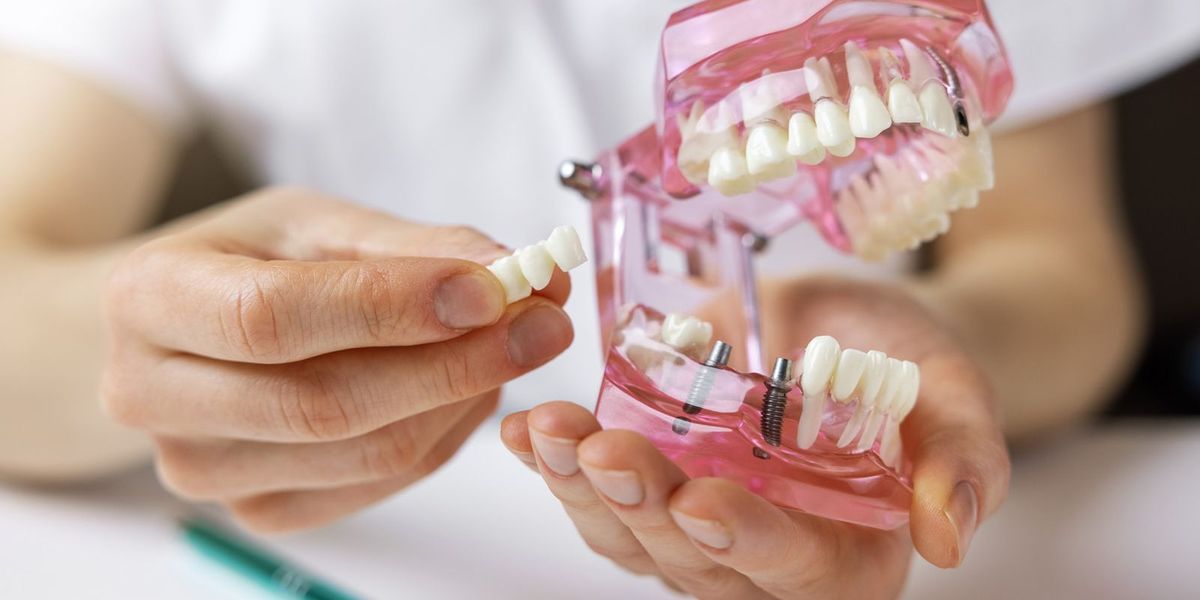
How Much Does a Dental Bridge Cost?
A dental bridge costs $1,500 to $5,000 for the standard three-unit bridge, averaging about $3,500, according to SmileCosts' 2026 pricing guide. Delta Dental's out-of-network data puts the average at about $3,600, and CareCredit's study reports $5,197 for a traditional single-tooth bridge. The range is wide because a bridge is three units priced together, and the type and material set the total.
A bridge replaces a missing tooth by anchoring a false tooth to the healthy teeth on either side of the gap. It is fixed in place, fitted in two or three visits, and sits between the cheapest fix (a partial denture) and the most expensive one (an implant).
Dental Bridge Cost at a Glance
The table below shows typical prices in the United States, checked Nov 12, 2026 (sources: SmileCosts, Delta Dental, CareCredit, and Dental Price Guide).
| Item | Typical cost |
|---|---|
| National average (3-unit bridge) | About $3,500 |
| Most 3-unit bridges | $1,500–$5,000 |
| Per unit | $700–$1,500 |
| Maryland bridge (front tooth) | $1,500–$2,500 |
| Implant-supported bridge | $4,000–$16,000 |
| Single implant (comparison) | $3,500–$6,000 per tooth |
| With insurance, out of pocket (3-unit) | About $750–$1,800 |
The three sources disagree on the average — $3,500 (SmileCosts), about $3,600 (Delta Dental), $5,197 (CareCredit) — because CareCredit's study average includes higher-cost cases and premium materials. The $1,500 to $5,000 band is the one every source agrees on, and it is the planning range to use.
The Per-Unit Math: Decode Any Quote in Ten Seconds
Bridges are priced per unit: every false tooth and anchor crown counts as one unit, typically $700 to $1,500 each (SmileCosts, 2026; a Brooklyn practice puts the range at $500 to $1,200).
A "three-unit bridge" means three units: one anchor crown, one false tooth (called a pontic), and one anchor crown. At $1,200 a unit, that is $3,600 — which is why $3,600 keeps appearing as the average. At $700 a unit, the same bridge is $2,100; at $1,500 a unit, it is $4,500.
Ask the dentist how many units the bridge has and what the per-unit fee is. A quote for a three-unit bridge at $6,000 means $2,000 a unit — well above the typical range, and worth questioning. A quote at $1,800 means $600 a unit — at or below the bottom of the range, and worth asking what material is being used.
Cost by Bridge Type
The type of bridge sets the price band. Traditional is the standard; Maryland is the budget front-tooth option; implant-supported is the premium choice.
| Bridge type | Typical total cost | What it is |
|---|---|---|
| Traditional (3-unit) | $2,000–$5,000 | False tooth anchored by crowns on both neighbours — the standard choice |
| Maryland (resin-bonded) | $1,500–$2,500 | False tooth glued to the backs of neighbours with metal or ceramic wings; front teeth only |
| Implant-supported (3–4 units) | $4,000–$16,000 | Bridge carried by two implants instead of ground-down teeth |
The traditional bridge is the workhorse: two crowns on the neighbouring teeth hold the false tooth between them. It costs $2,000 to $5,000 for three units, and it is the right choice for a back tooth, where chewing force is highest.
The Maryland bridge is cheaper — $1,500 to $2,500, CareCredit average $1,569 — because the neighbours are not shaved down; metal or ceramic wings bond to their backs. It only works for front teeth, where biting force is light.
The implant-supported bridge is the expensive option: $4,000 to $16,000 for three to four units (SmileCosts), or $8,000 to $15,000 in a high-cost market like New Jersey. Two implants carry the bridge instead of crowns on natural teeth, so no healthy tooth is ground down. It is the right choice when the neighbouring teeth are healthy and worth preserving, or when there are no neighbouring teeth left to anchor to.
Insurance: The 50 Percent Rule
Dental bridges fall under "major restorative" on most dental insurance plans, which typically means about 50 percent coverage after your deductible, capped by the annual maximum. That is the rule to remember — and the annual maximum is the part that bites.
On a $3,600 three-unit bridge, 50 percent coverage brings the patient's share to about $1,800 before the deductible. A Brooklyn practice puts the typical out-of-pocket range at $750 to $1,800, depending on the plan. The variation is the annual maximum: most dental plans cap benefits at $1,000 to $2,000 a year, and a bridge alone can use up the whole year's allowance.
Without insurance, you pay the full $1,500 to $5,000 for a standard three-unit bridge. Three ways to cut that bill: ask the dentist for a cash-pay or paid-in-full discount (many practices offer 5 to 10 percent), and check whether a dental school clinic does bridges (typically 40 to 60 percent less than private practice).
Bridge vs Implant: The Lifetime Bill
A traditional bridge typically lasts 10 to 15 years before it needs replacing. At $3,500 a bridge, two to three replacements over thirty years cost $7,000 to $10,500 in total — and each replacement means more drilling on the anchor teeth, which can eventually fail and need work of their own. A single implant costs $3,500 to $6,000 per tooth up front, but it can last 25 years or more with no replacement, and it does not touch the neighbouring teeth. It also preserves the jawbone: a bridge leaves the bone under the missing tooth to shrink over time, while an implant stimulates it.
| Option | Up-front cost | Lifespan | 30-year total (approx.) |
|---|---|---|---|
| Traditional bridge (3-unit) | $1,500–$5,000 | 10–15 years | $7,000–$10,500 |
| Single implant + crown | $3,500–$6,000 | 25+ years | $3,500–$6,000 |
| Maryland bridge | $1,500–$2,500 | 5–10 years | $4,500–$7,500 |
The bridge still wins in three cases: when the neighbouring teeth already need crowns anyway, when the patient wants the gap closed in weeks rather than the months an implant takes to heal, and when bone loss or health conditions rule out implant surgery. Otherwise, the implant's lifetime maths is hard to beat.
A Worked Example: One Missing Molar
Take a missing lower molar replaced with a traditional three-unit bridge, priced at the Delta Dental average of $3,600, with insurance that covers 50 percent of major restorative work after a $50 deductible, and an annual maximum of $1,500.
| Line item | Cost |
|---|---|
| Three-unit bridge (3 units × $1,200) | $3,600 |
| Deductible | −$50 |
| Insurer pays 50% of the rest | −$1,775 |
| Insurer pays, capped at annual maximum | $1,500 |
| Patient pays | $2,100 |
The annual maximum is doing real work here: without the $1,500 cap, the insurer would have paid $1,775 and the patient $1,825. The same bridge without insurance costs the full $3,600.
Mistakes to Avoid
- Accepting a total without the per-unit price. A three-unit bridge at $6,000 is $2,000 a unit — well above the $700 to $1,500 range. Ask for the unit count and the per-unit fee.
- Forgetting the annual maximum. Insurance pays 50 percent, but only up to the year's cap — usually $1,000 to $2,000. A bridge can use the whole year's allowance in one visit.
- Choosing a Maryland bridge for a back tooth. It is a front-tooth-only design. On a molar it will fail under chewing force, and the replacement costs more than doing it right the first time.
- Ignoring the neighbouring teeth. A traditional bridge grinds down two healthy teeth. If they are healthy and worth preserving, an implant-supported bridge or a single implant is the better long-term choice.
- Comparing a bridge to an implant on the first bill only. The bridge is cheaper today and more expensive over thirty years. Price the lifetime, not the visit.
If a bridge isn't the right fit, dentures are the main alternative — see how much dentures cost.
Frequently Asked Questions
How much does a dental bridge cost?
A standard three-unit bridge costs $1,500 to $5,000, averaging about $3,500, checked Nov 12, 2026. Bridges are priced per unit — $700 to $1,500 each — and a three-unit bridge has three units: two anchor crowns and one false tooth.
How much does a dental bridge cost with insurance?
Most plans cover about 50 percent of major restorative work after the deductible, bringing a $3,600 bridge to roughly $750 to $1,800 out of pocket. The annual maximum — usually $1,000 to $2,000 — caps what the insurer pays.
How long does a dental bridge last?
A traditional bridge typically lasts 10 to 15 years. A Maryland bridge lasts 5 to 10 years. A single implant, by comparison, can last 25 years or more — which is why the implant is often cheaper over a lifetime despite costing more up front.
An implant is better for the neighbouring teeth and the jawbone, and cheaper over thirty years. A bridge is better when the neighbouring teeth already need crowns, when you want the gap closed in weeks, or when implant surgery is not an option for health reasons.
Is a bridge or an implant better for one missing tooth?
An implant is better for the neighbouring teeth and the jawbone, and cheaper over thirty years. A bridge is better when the neighbouring teeth already need crowns, when you want the gap closed in weeks, or when implant surgery is not an option.
Does a bridge require shaving down healthy teeth?
A traditional bridge does — the two neighbouring teeth are ground down to hold the anchor crowns. A Maryland bridge bonds wings to the backs of the neighbours instead, and an implant-supported bridge does not touch them at all.