How Much Do Dentures Cost?
Dentures cost $452 for a basic full set, $1,968 for a traditional set, and $6,514 for a premium set, according to the CareCredit Synchrony Average Procedural Cost Study (2023–2024). CareCredit's newer 2026 study puts the traditional removable denture at $2,022 on average, with a range of $1,493 to $3,309. The numbers look inconsistent across sources — $340 in one place, $11,000 in another — because they are describing different appliances, and sometimes different jaws.
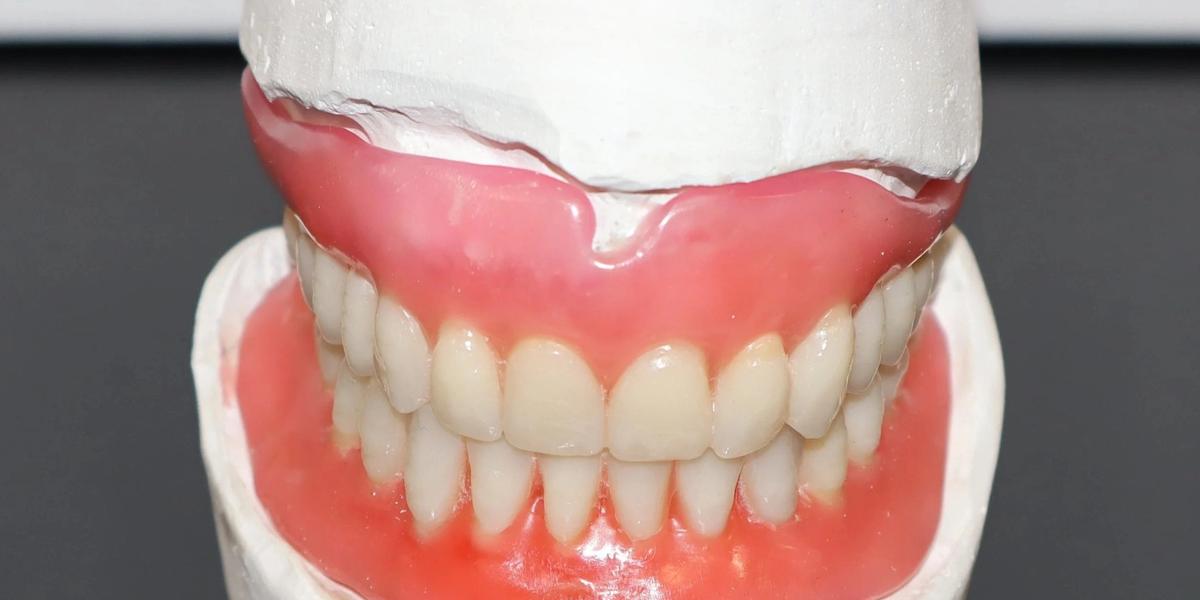
A denture is a removable replacement for missing teeth: a gum-coloured base holding artificial teeth, fitted to the shape of your mouth. A full denture replaces all the teeth in one jaw; a partial replaces a few and clips to the ones that remain. Dentures are the cheapest way to replace a full set of teeth — and the price gap between economy and premium is the widest in dentistry, a factor of fourteen between the cheapest and the most expensive full set.
Dentures Cost at a Glance
The table below shows typical prices in the United States, checked Nov 12, 2026 (sources: CareCredit/Synchrony, Delta Dental, and GoodRx).
| Item | Typical cost |
|---|---|
| Basic full set (upper + lower) | $452 average |
| Traditional full set (upper + lower) | $1,968 average |
| Premium full set (upper + lower) | $6,514 average |
| Traditional, per denture (2026 study) | $2,022 average ($1,493–$3,309) |
| Full lower denture, per arch | $1,115–$2,425 |
| Full upper denture, per arch | $1,220–$2,540 |
| Partial denture | $700–$3,500 |
| Implant-supported full dentures | $10,500–$21,500 |
The CareCredit figures are national study averages for an upper-and-lower set together. The Delta Dental figures are per arch — one jaw — out-of-network, from 2024 claims data. A "full set" and a "full denture" are not the same unit, and most of the confusion in denture pricing comes from mixing them up.
The Arch Trap: One Jaw or Two?
The number-one confusion in denture pricing is the unit. Almost every dentist quotes dentures per arch — the upper jaw or the lower jaw — not per set. A "$2,000 denture" is usually one arch. A full set is two arches, and roughly double the price.
Delta Dental's 2024 data makes the unit explicit: a full lower denture runs $1,115 to $2,425 and a full upper denture $1,220 to $2,540, each for one arch, out-of-network. Two arches at those rates come to $2,335 to $4,965. CareCredit's set averages tell the same story from the other side: $1,968 for a traditional upper-and-lower set, which works out to about $984 per arch — at the low end of Delta Dental's per-arch range, because the study averages include lower-cost practices.
Three questions to ask before accepting any denture quote: is this price for one arch or for both? Does it include extractions, if teeth still need to come out? And does it include the follow-up adjustments? A new denture almost always needs adjusting in the first weeks as the gums settle, and most practices include the first year's adjustments in the price — but not all of them do.
Cost by Type
The type of denture sets the price band. The material and the fitting time are what you are paying for — a premium denture is hand-finished over several appointments; an economy denture is made faster, from cheaper acrylic, with fewer fittings.
| Denture type | Typical cost | What it is |
|---|---|---|
| Economy / low-cost (full set) | $340–$760 | Basic acrylic, fewest fittings |
| Traditional removable (full set) | $1,493–$3,309 | The standard full denture, $2,022 average |
| Immediate (temporary, full set) | $1,670–$3,573 | Fitted the same day teeth are removed; replaced later |
| Premium (full set) | $4,484–$11,018 | Hand-finished, premium teeth, most fittings |
| Partial denture | $700–$3,500 | Replaces a few teeth; clips to remaining teeth |
| Implant-supported (full) | $10,500–$21,500 | Snaps onto implants; no adhesive needed |
Insurance and Medicare: What Pays
Dental insurance usually treats dentures as major restorative work, covering about 50 percent after the deductible, up to the annual maximum — typically $1,000 to $2,000 a year. On a $1,968 traditional set, that means roughly $984 from the insurer and $984 from the patient, assuming the deductible is already met. On a $6,514 premium set, the insurer still pays only up to the annual maximum, so the patient covers most of the bill either way.
Medicare does not cover dentures. Original Medicare excludes routine dental care entirely, and dentures are routine dental care — there is no exception for full dentures, partials, or repairs. Some Medicare Advantage plans include a dental benefit that covers part of the cost, but the benefit varies by plan and usually caps at a few hundred dollars a year. Check the plan's dental allowance before budgeting.
Medicaid varies by state. Some states cover full dentures for adults, some cover them only in emergencies, and some do not cover them at all. Where Medicaid does pay, it pays far less than private rates: Medicaid paid an average of $499 per claim line for a complete upper denture in 2023–2024, against a cash benchmark roughly twice that.
Implant-Supported Dentures: The $10,500–$21,500 Question
Implant-supported dentures are a different product at a different price: $10,500 to $21,500 for a full set without insurance (GoodRx, updated February 2025). The denture snaps onto implants in the jaw instead of resting on the gums, so it does not slip, does not need adhesive, and lets the wearer eat foods a conventional denture cannot handle. It also preserves the jawbone, which shrinks under a conventional denture over the years.
The cost is driven by the implants: CareCredit's 2026 study puts implant-supported dentures at an average of $4,093 per implant, with a range of $2,830 to $7,203. A typical snap-on denture uses two to four implants per arch, and the denture itself averages $2,540. Do not simply multiply $4,093 by the implant count and call the product the full cost — grafting, extractions, and healing visits are billed separately.
A Worked Example: A Traditional Full Set, No Insurance
Take a patient with no teeth left in either jaw, choosing a traditional removable set, no insurance, at the CareCredit 2024 study averages:
| Line item | Cost |
|---|---|
| Traditional full set (upper + lower) | $1,968 |
| Initial exam and impressions | Included in most quotes |
| First-year adjustments | Usually included |
| Total | $1,968 |
The same patient at the economy tier pays $452 for the set, and at the premium tier $6,514. The spread is the fitting: a premium denture is measured, tried in, adjusted, and hand-finished over several appointments; an economy denture is made faster with fewer fittings. The teeth themselves are the same material in all three tiers — what changes is the fit, and the fit is what decides whether the denture is comfortable enough to wear every day.
Mistakes to Avoid
- Accepting a per-arch price as a full-set price. Most quotes cover one jaw. A "$2,000 denture" is usually $4,000 for both arches. Ask the unit before you accept the number.
- Budgeting for one denture when you need two. An immediate denture is temporary — it is replaced by a permanent denture within 6 to 12 months as the gums heal. Budget for both.
- Assuming Medicare covers dentures. It does not. Original Medicare excludes routine dental care entirely. Check a Medicare Advantage plan's dental allowance instead — and read the cap.
- Forgetting the adjustments. A new denture needs adjusting as the gums settle. Confirm the first year's adjustments are included in the quoted price.
- Choosing economy on fit alone. The teeth are the same material in every tier — the fitting is what you pay for. An economy denture that does not fit is $452 wasted; a traditional denture that fits is $1,968 well spent.
Frequently Asked Questions
How much do dentures cost?
A full set costs $452 for basic, $1,968 for traditional, and $6,514 for premium, according to the CareCredit Synchrony study, checked Nov 12, 2026. CareCredit's 2026 study puts the traditional denture at $2,022 on average. Implant-supported full dentures cost $10,500 to $21,500.
How much do dentures cost per arch?
A full lower denture runs $1,115 to $2,425 and a full upper $1,220 to $2,540, per arch, out-of-network (Delta Dental, 2024). Most quotes are per arch — a full set is two arches, roughly double the quoted price.
Does Medicare cover dentures?
No. Original Medicare excludes routine dental care, including dentures. Some Medicare Advantage plans include a dental benefit, but it usually caps at a few hundred dollars a year. Medicaid coverage varies by state.
How long do dentures last?
A conventional full denture typically lasts 5 to 10 years before it needs replacing, and needs relining every 1 to 2 years as the gums and bone change shape. An implant-supported denture lasts longer, because the implants stop the bone loss that loosens a conventional denture.
Are dentures or implants better?
Implants are better for chewing, speaking, and preserving the jawbone, and they last longer — but a single implant costs $3,500 to $6,000, and a full implant-supported set runs $10,500 to $21,500. Dentures are the affordable option, and for many patients a traditional set at $1,968 is the right balance of cost and function.