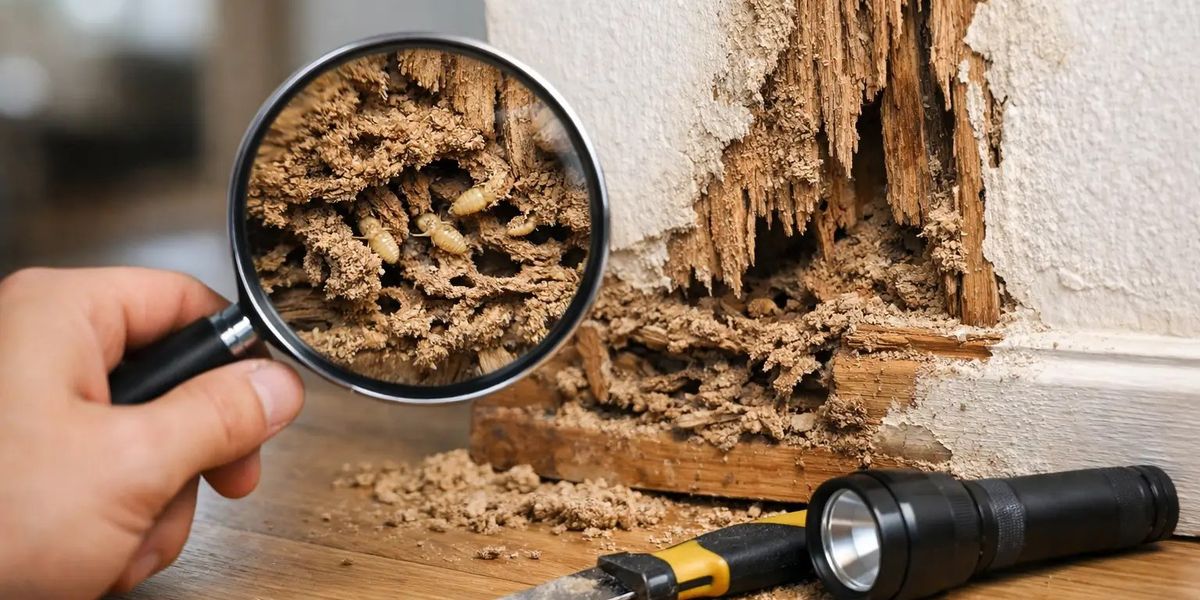
How Much Does Termite Treatment Cost?
Termite treatment costs $263 to $1,033 for most homes, averaging about $621, according to HomeAdvisor's 2026 data. A spot treatment for a small, contained infestation costs $150 to $300, while full fumigation — tenting the whole house — runs $1,200 to $2,500. Damage repair is a separate bill, and it is usually the bigger one.
Termites cause an estimated $5 billion in property damage a year in the United States, and homeowners insurance does not cover it. The treatment is cheap insurance against a bill that is often measured in thousands.
Termite Treatment Cost at a Glance
The table below shows typical prices in the United States, checked Nov 11, 2026 (sources: HomeAdvisor, This Old House, and Angi's 2026 data).
| Item | Typical cost |
|---|---|
| National average | $621 |
| Most homes | $263–$1,033 |
| Spot treatment | $150–$300 |
| Liquid barrier | $1,100–$3,000 |
| Fumigation (tenting) | $1,200–$2,500 |
| Inspection | $75–$150 (often free) |
| Annual bond renewal | $150–$500 |
| Damage repair | $500–$3,000+ |
This Old House puts the average higher, at $794, with a range of $234 to $1,377 — and reports that its own survey of 1,000 homeowners found an average of $1,000. Angi's data puts the national average at $580 for a standard treatment, with most homeowners spending $300 to $900. The spread between sources is the method: spot treatments and barrier treatments are different jobs, and averages hide which one the home needed.
Cost by Method
The method sets the price. Liquid barrier is the cheapest whole-home fix; fumigation is the most expensive; spot treatment is the cheapest of all, and only fits a small, contained problem.
| Method | Typical cost | Best for |
|---|---|---|
| Spot treatment | $150–$300 | One small, contained area |
| Liquid barrier (trench + soil) | $1,100–$3,000 | Whole-home prevention |
| Bait stations | $1,500–$3,000 | Ongoing monitoring |
| Heat treatment | $800–$2,500 | Localised infestation, no chemicals |
| Fumigation (tenting) | $1,200–$2,500 | Widespread drywood infestation |
Liquid barrier works by trenching around the foundation and applying termiticide to the soil — it creates a treated zone termites cannot cross without contact, and it can be applied without entering the home. Fumigation tents the whole house and releases a gas that penetrates every wall cavity; the household must leave for 24 to 72 hours, and food and plants come out too. Heat treatment raises the infested area to about 120°F for a few hours, killing termites without chemicals — it works for a localised problem, but a widespread one needs the whole house tented.
Cost by Species
Two species do most of the damage in the United States, and the species decides the treatment — which is why an inspection comes first.
| Species | Where it lives | Typical treatment cost |
|---|---|---|
| Subterranean | Soil, mud tubes up foundations | $300–$900 (spot to barrier) |
| Drywood | Inside dry wood, no soil contact | $1,200–$2,500 (fumigation) |
| Formosan | South-east and Gulf coast | $1,000–$3,000 (aggressive colonies) |
Subterranean termites are the commonest and the cheapest to treat: they live in the soil and reach the house through mud tubes, so a liquid barrier or bait stations cut them off at the source. Drywood termites live inside the wood itself — there are no mud tubes, and the only reliable whole-house fix is fumigation. Formosan termites, found in the south-east and Gulf coast, build colonies of millions and eat faster than other species; their treatments run at the top of the range.
If the inspector finds mud tubes along the foundation, the job is probably subterranean and the cheaper end of the range applies. If the inspector finds piles of dry pellets — frass — near windows or furniture, the job is probably drywood, and fumigation is the honest quote.
The Bond Renewal Trap
The price most homeowners miss is not the treatment — it is the year after. Many companies sell the treatment with a termite bond: a yearly contract that covers re-treatment if termites return, and re-inspection. Bait systems need monitoring anyway, at $200 to $400 a year, and a bond renewal typically runs $200 to $500 a year. Skip the renewal and the guarantee lapses — and if termites come back, the next treatment is a new bill at full price.
Damage repair is the other separate bill, and it is the big one. Angi puts it at $250 to $6,000 on top of the treatment, and a bad case — structural timbers, a sill plate, a section of floor — can pass $6,000. One homeowner's account in a 2026 guide tells the story plainly: the treatment cost $1,400, and the structural repairs cost $8,000. The treatment kills the termites; it does not rebuild the wood they ate.
A Worked Example: Subterranean, 2,000-Square-Foot Home
Take a homeowner with subterranean termites in a 2,000-square-foot home on a slab foundation, treated with a liquid barrier.
| Line item | Cost |
|---|---|
| Inspection | $0–$75 (often free with treatment) |
| Liquid barrier, ~200 linear ft at $9 per ft | $1,800 |
| Follow-up inspection (30 days) | Included |
| Bond renewal, year 1 | $300 |
| Total, first year | $2,100 |
That sits at the top of the standard band, because a 200-linear-foot perimeter is a large one — a compact home with a 120-foot perimeter would cost about $1,080 for the same treatment. The same homeowner choosing bait instead would pay $1,000 to $2,500 for the install, plus $200 to $400 a year in monitoring — cheaper in year one, more expensive by year three.
Mistakes to Avoid
- Treating before identifying the species. Liquid barrier does nothing for drywood termites living inside a beam. Get the species named in writing before you accept a method.
- Comparing a spot quote to a whole-home quote. A $250 spot treatment and a $2,000 whole-home barrier are different scopes. Make sure every quote covers the same area.
- Letting the bond lapse. The $200 to $500 yearly renewal is the guarantee. Skip it and the next infestation is a new full-price job.
- Forgetting the repair bill. Treatment and repair are separate. Budget $250 to $6,000 for the wood the termites already ate — and get the repair quoted before the treatment, not after.
- Assuming insurance covers it. Standard homeowners insurance does not cover termite damage or treatment. It is classified as maintenance, and the bill is yours.
Frequently Asked Questions
How much does termite treatment cost?
About $621 on average, checked Nov 11, 2026, with most homeowners paying $263 to $1,033. Whole-home liquid or bait treatment runs $1,000 to $2,500, and fumigation $2,000 to $8,000.
Which termite treatment is cheapest?
Liquid barrier, at $3 to $16 per linear foot — $230 to $930 for a typical job. Bait systems cost more up front and add $200 to $400 a year in monitoring.
How much does termite damage repair cost?
Separately from treatment, $250 to $6,000, according to Angi. Structural repairs can pass $6,000, and the repair is almost always more expensive than the treatment that stopped the termites.
Do I need a termite bond?
If the company offers one, yes — the $200 to $500 yearly renewal keeps the re-treatment guarantee alive. Without it, a returning colony means a new full-price treatment.
Does homeowners insurance cover termites?
No. Termite damage is classified as a maintenance issue, not a sudden accident, so neither the treatment nor the repair is covered by a standard policy.