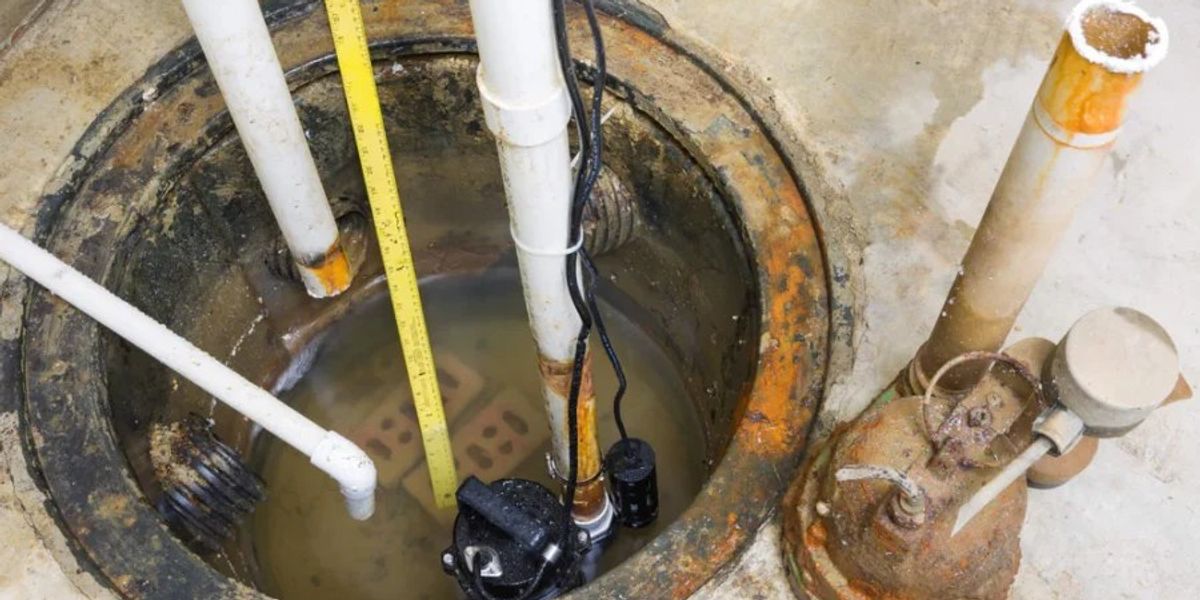
How Much Does It Cost to Install a Sump Pump?
A sump pump installation costs $800 to $1,500 for most homes, averaging about $1,100, according to Angi and HomeAdvisor's 2026 data. The price splits on one question: does a pit already exist? A replacement — new pump in an existing pit — costs $400 to $800. A brand-new pit, dug through a concrete basement floor, runs $1,000 to $2,500.
A sump pump is the cheapest flood insurance a basement will ever get, and it is also the most overlooked. It sits in a pit, waits for water, and runs a few times a year — until the one night it does not, and the basement floods.
Sump Pump Installation Cost at a Glance
The table below shows typical prices in the United States, checked Nov 11, 2026 (sources: Angi, HomeAdvisor, and HomeGuide's 2026 data).
| Item | Typical cost |
|---|---|
| National average | About $1,100 |
| Most installs | $800–$1,500 |
| Replacement (existing pit) | $400–$800 |
| New pit, concrete floor | $1,000–$2,500 |
| Battery backup system | $300–$800 |
| Water-powered backup | $400–$1,000 |
| Permit | $50–$150 |
Angi's average for a sump pump install is $1,100, with most homeowners paying $800 to $1,500. HomeAdvisor puts the average at $1,100 as well, with a range of $500 to $2,000 for the full range of jobs — and notes that a simple replacement in an existing pit can be as low as $400. The $800 to $1,500 band is the planning range for a standard new install in a home that already has a pit or a dirt floor.
Replacement vs New Pit: The Price Split
Whether a pit already exists is the price split, and it is worth checking before any quote is taken seriously.
| Situation | Typical cost | What the crew does |
|---|---|---|
| Replacement, pit exists | $400–$800 | Swap pump, check valve, test |
| New pit, dirt floor | $800–$1,500 | Dig pit, set basin, connect discharge |
| New pit, concrete floor | $1,000–$2,500 | Cut slab, dig, set basin, pour back |
| New pit + battery backup | $1,500–$2,800 | Pit work plus backup system |
A replacement is an hour's work: the old pump comes out, the new one goes in, the check valve is inspected, and the system is tested with a bucket of water. A new pit in a concrete floor is a different job — the crew cuts a hole in the slab with a rented saw, digs down about two feet, sets a plastic basin, connects the discharge pipe through the wall, and pours concrete back around the basin. That is why the same pump costs $400 in one home and $2,500 in another.
Cost by Pump Type: Pedestal vs Submersible
Two pump designs cover nearly every home, and the choice is between cheap and quiet.
| Pump type | Typical cost | Lifespan | Noise | Best for | |---|---|---| | Pedestal | $150–$400 | 20–25 years | Loud | Tight budgets, utility rooms | | Submersible | $250–$800 | 10–15 years | Quiet | Finished basements, living space | | Sewage / grinder (for ejector) | $700–$1,500 | 7–10 years | Moderate | Basement bathrooms |
A pedestal pump keeps its motor above the water on a long shaft, so it stays dry and lasts 20 to 25 years — but it hums loudly every time it runs, which is why it belongs in a utility room and not under a bedroom. A submersible pump sits in the pit under water, so it is nearly silent, but its motor works in a wet environment and lasts 10 to 15 years. Most homes with a finished basement choose submersible; most homes with an unfinished utility basement choose pedestal, and when it fails you are reaching into the pit to get it.
Battery Backup: The Add-On That Matters Most
A sump pump runs on electricity, and the storms that flood basements are the same storms that cut the power. That is why the battery backup is the add-on worth knowing about — and the one most often skipped to save money.
A battery backup add-on costs $200 to $500 as parts, or $300 to $700 installed alongside the primary pump. A complete installed battery-backup system — backup pump, battery, charger, and alarm — runs $1,000 to $2,000, with Bob Vila averaging $1,220. Batteries need replacing every 3 to 5 years. A dual-pump system, with a second pump on battery power, runs $2,200 to $4,500 for a new installation.
The arithmetic is simple: a $1,200 primary pump that stops in a power cut is worth nothing during the one night a year the basement floods. In a flood-prone home, or anywhere storms knock out power, the backup is essential — outages and flooding arrive together.
One more line to check on every quote: the discharge. Never discharge sump pump water into your municipal sanitary sewer line — it is illegal in most US municipalities and can cause sewage system overflows. The discharge line must run outside, to daylight or a storm drain, and a quote that routes it to the sewer is a quote to reject.
A Worked Example: New Pit in a Concrete Basement
Take a homeowner adding a first sump pump to a basement with a concrete floor, choosing a 1/2 HP submersible pump with a battery backup.
| Line item | Cost |
|---|---|
| Submersible pump, 1/2 HP | $250 |
| Basin, check valve, discharge pipe | $200 |
| Slab cutting and pit excavation | $900 |
| Labour, plumber, 1 day | $800 |
| Battery backup system | $850 |
| Total | $3,000 |
That sits inside the $1,500 to $4,000 band for a new installation, near the top — the concrete cutting and the backup are what push it there. The same homeowner replacing a pump in an existing pit would pay $400 to $1,000, and skipping the backup would cut $850 off this job — the saving that costs the most when the power goes out.
Mistakes to Avoid
- Comparing a replacement quote to a new-pit quote. They are different jobs. Make sure every quote says whether a pit already exists.
- Skipping the battery backup. Storms cut power and flood basements at the same time. A $200 to $500 add-on is cheap insurance against the one night it matters.
- Discharging into the sanitary sewer. It is illegal in most municipalities and can cause sewage overflows. The discharge must go outside.
- Buying too small a pump. A 1/3 HP pump in a high-water-table home runs constantly and burns out early. Size by gallons per hour, not by price.
- Forgetting the check valve. Without one, water flows back into the pit every time the pump stops, and the pump cycles itself to death. It is a $15 to $40 part — make sure it is in the quote.
Frequently Asked Questions
How much does it cost to install a sump pump?
About $1,100 on average, checked Nov 11, 2026, with most professional installs between $800 and $1,500. A replacement in an existing pit costs $350 to $1,000; a brand-new installation costs $1,500 to $4,000.
Which is better, a pedestal or submersible sump pump?
Submersible for most homes: quieter, more powerful, and the most common choice, at $1,200 to $3,000 installed. Pedestal is cheaper at $800 to $1,500, easier to service, and lasts up to 25 years — but louder.
Do I need a battery backup for my sump pump?
Yes, if your area loses power in storms. A battery backup add-on costs $200 to $500, or $1,000 to $2,000 for a complete backup system. Outages and flooding arrive together, so a pump without backup stops when you need it most.
How long does sump pump installation take?
A replacement takes a few hours. A new installation takes a full day, or two if the slab has to be cut and patched. The concrete needs time to cure before the system is tested under load.
Can I install a sump pump myself?
Yes, for $300 to $800 in parts — but it takes a full weekend for a first-timer, and cutting a concrete slab needs a rented saw and a steady hand. A professional job costs $1,000 to $2,500 all-in and includes a warranty, a permit, and a tested system.