How Much Does It Cost to Install a Heat Pump?
Installing a heat pump costs $4,500 to $20,000, averaging about $6,100 for a standard air-source system. That covers the outdoor unit, the indoor unit or air handler, the refrigerant lines, the electrical work, and the labour to install it. It is the one HVAC upgrade that both heats and cools your home — a heat pump replaces your furnace and your air conditioner in a single box.
The big change for 2026: the $2,000 federal tax credit ended on Dec 31, 2025. Systems installed in 2025 or earlier could claim up to $2,000 back under the Section 25C credit; systems installed in 2026 cannot. This guide covers prices by system type and size, the ended credit's effect on the maths, running costs against a gas furnace, and a worked example.
Heat Pump Installation Prices at a Glance
The table below shows typical installed prices in the United States, checked Nov 8, 2026 (sources: Angi, Modernize, Joule, and Budget Heating).
| System type | Typical installed cost | Best for |
|---|---|---|
| Mini-split, single zone | $1,500–$7,000 | One room, addition, no ducts |
| Mini-split, multi-zone (2–3 zones) | $6,500–$11,500 | Whole home, no ducts |
| Central air-source (ducted) | $4,500–$20,000 | Homes with existing ductwork |
| Cold-climate air-source | $8,000–$15,000 | Cold winters, whole home |
| Geothermal (ground-source) | $20,000–$50,000+ | Long-term home, maximum efficiency |
Angi puts the national average at $6,087, based on 4,719 verified projects, with most homeowners paying between $4,236 and $7,942. Modernize gives $6,500 to $12,000 for most homes, averaging near $9,000. The spread is wide because "heat pump" covers everything from a single-room mini-split to a whole-home geothermal system.
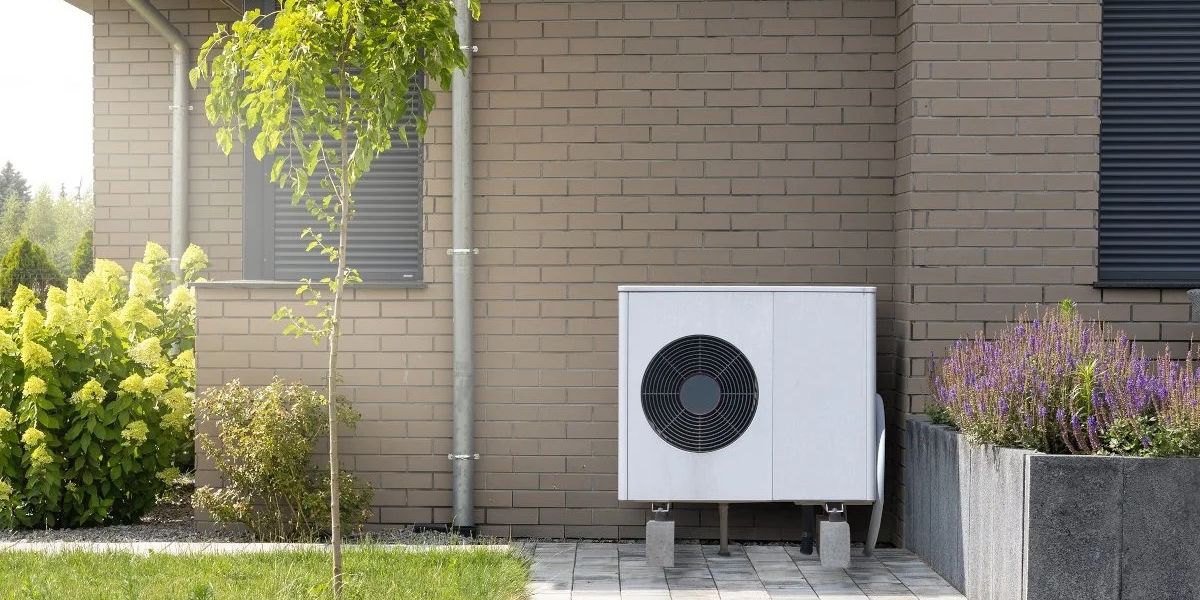
A mini-split is the cheapest way in: one outdoor unit and one indoor head, heating and cooling a single room or zone, for $1,500 to $7,000 installed. A central air-source heat pump, which uses your existing ductwork to heat and cool the whole house, costs $4,500 to $8,000 for a standard model and up to $20,000 for a premium cold-climate unit. Geothermal is a different tier — $20,000 to $50,000 or more — because of the buried ground loop.
Cost by System Size
Heat pumps are sized in tons, and one ton covers roughly 500 to 600 square feet of living space. A 2,000-square-foot home usually needs a 3- to 4-ton system.
| Home size | System size | Typical installed cost |
|---|---|---|
| Under 1,000 sq ft | 1.5–2 ton | $4,500–$7,000 |
| 1,000–1,500 sq ft | 2–2.5 ton | $5,500–$9,000 |
| 1,500–2,000 sq ft | 3 ton | $6,500–$11,000 |
| 2,000–2,500 sq ft | 3.5–4 ton | $7,500–$13,000 |
| Over 2,500 sq ft | 4–5 ton | $9,000–$20,000 |
Efficiency ratings push the price up. A standard 14 SEER2 unit sits at the bottom of the range; a premium variable-speed unit at 20 SEER2 or higher costs $2,000 to $5,000 more but runs quieter and uses less electricity. Cold-climate models cost more than standard models — worth it in Chicago or Boston, unnecessary in Atlanta.
Labour is 30 to 60 percent of the total, according to HVAC industry cost data from Angi and HomeGuide, and prices vary up to 40 percent between the lowest and highest bidders for the same system in the same market — get at least three quotes.
The $2,000 Federal Tax Credit Ended Dec 31, 2025
This is the fact most 2026 guides get wrong, so here it is plainly: the Section 25C Energy Efficient Home Improvement Credit, which paid up to $2,000 for a qualifying air-source heat pump, ended for equipment installed after Dec 31, 2025. It was ended by the One Big Beautiful Bill Act. Systems installed in 2026 or later do not qualify. Do not let any installer quote you a price "after the federal credit" for a 2026 install — that credit no longer exists.
The geothermal credit ended too: geothermal systems used to qualify for a 30 percent credit under Section 25D with no cap. A $30,000 system installed in 2025 could have claimed $9,000 back; the same system in 2026 costs the full $30,000.
That changes the maths, but it does not kill the case for a heat pump. State and utility incentives still exist — some utilities offer rebates of $500 to $2,000 — and the running-cost advantage over gas remains. Check your state's energy office and your utility's rebate programme before signing anything.
Heat Pump vs Gas Furnace: Running Costs
A heat pump moves heat instead of making it, so it delivers 200 to 400 percent efficiency (a COP of 2.0 to 4.0), while a gas furnace burns fuel at 80 to 98 percent efficiency.
| Climate | Gas furnace (96% AFUE) | Heat pump | Annual saving | |---|---|---| | Mild winter (Atlanta, Dallas) | $600–$900 | $300–$500 | $200–$500 | | Moderate winter (Nashville, Portland) | $900–$1,300 | $450–$750 | $350–$650 | | Cold winter (Chicago, Boston) | $1,300–$1,800 | $700–$1,100 | $400–$800 | | Very cold winter (Minneapolis) | $1,800–$2,400 | $1,000–$1,600 | $400–$1,000 |
The figures above assume national average utility rates of about $0.16 per kWh and $1.20 per therm, checked Nov 8, 2026 (sources: Cost to Renovate and Permit Deck). A heat pump typically cuts heating costs by 30 to 50 percent. The saving shrinks where gas is cheap and electricity is expensive — check your own bills before deciding.
The fair comparison is heat pump versus furnace plus air conditioner, not furnace alone. A heat pump replaces both, so the upfront gap is smaller than it looks: a mid-range furnace costs $3,000 to $7,000 installed, and adding an air conditioner brings the pair to roughly $8,000 to $12,000 — about the same as a central heat pump.
What Else Drives the Price
Ductwork is the hidden cost. If your ducts are in good shape, a central heat pump bolts straight on; if they leak, are undersized, or do not exist, repair or installation adds $2,000 to $5,000 — or pushes you toward a ductless mini-split instead.
Electrical work is the second driver: a heat pump needs a dedicated circuit and sometimes a panel upgrade, adding $500 to $2,000. Older homes with a 100-amp panel usually need an upgrade to 200 amps.
A Worked Example: A 3-Ton Central Heat Pump
Take a 2,000-square-foot home with existing ductwork in a moderate climate, replacing a 20-year-old furnace and a 15-year-old air conditioner with a single 3-ton central air-source heat pump.
- 3-ton central heat pump, 17 SEER2: $6,500
- Installation labour and refrigerant lines: $2,000
- Electrical work (new circuit): $500
- Permits and inspection: $300
Total: $9,300 — above the $6,087 national average, because it is a mid-efficiency unit with electrical work included. The same home buying a furnace ($4,500) plus a new air conditioner ($5,500) would pay about $10,000 for two boxes. The heat pump costs less up front and does both jobs.
Running costs: at $0.16 per kWh, the heat pump heats the home for about $600 a year, against about $1,100 a year for a 96 percent AFUE gas furnace — a saving of roughly $500 a year, or $7,500 over 15 years, plus one system to maintain instead of two. Without the old $2,000 credit, the payback is slower than the 2025 headlines promised, but the maths still favours the heat pump in a moderate climate.
Mistakes to Avoid
- Believing the $2,000 credit still applies. It ended Dec 31, 2025. Any 2026 quote "after the credit" is wrong.
- Sizing from square footage alone. A load calculation (Manual J) accounts for insulation, windows, and climate — a rule-of-thumb size is often wrong.
- Comparing a heat pump to a furnace alone. The fair comparison is heat pump versus furnace plus air conditioner.
- Skipping the ductwork check. Leaky or undersized ducts waste the efficiency you paid for.
- Taking the cheapest quote without a written scope. A quote excluding the electrical work, permits, or refrigerant lines is not a low quote.
Frequently Asked Questions
How much does it cost to install a heat pump?
About $4,500 to $20,000 installed, checked Nov 8, 2026, averaging about $6,100. A single-zone mini-split costs $1,500 to $7,000, a central air-source system $4,500 to $8,000, and geothermal $20,000 to $50,000 or more.
Is the $2,000 federal heat pump tax credit still available?
No. The Section 25C credit of up to $2,000 ended for equipment installed after Dec 31, 2025.
Is a heat pump cheaper to run than a gas furnace?
Usually yes — a heat pump typically cuts heating costs by 30 to 50 percent, saving $350 to $650 a year in a moderate climate. The saving is smaller where gas is cheap and electricity is expensive.
How long do heat pumps last?
About 15 years for an air-source heat pump, and 25 years or more for geothermal — the underground loop can last 50 years. A gas furnace lasts 15 to 20 years, and an air conditioner 12 to 15.
Do I need new ductwork for a heat pump?
Not if your ducts are in good shape — a central heat pump uses existing ductwork. If you have no ducts, a ductless mini-split is usually the better choice.